The Other Side of the Clipboard
I have written here about my adventures in field trialing.
I have written here about my adventures in field trialing. Whether they were based on the American Field style of trial or a Shoot to Retrieve trial that is based on the United Field Trialer Association (UFTA) model.
So recently another event was being hosted at Oak Hill Shooting Preserve. However this event turned out to be a little different.
This was another Shoot to Retrieve event that was based on the format of the UFTA. So that isn’t anything different.
It is at a preserve that I have been to many times over the years. So that isn’t anything different.
So what is different you ask? What is different about this one is I am the one judging the dogs.
You read that right I had the honor of being the one to judge the competitors on this cold, windy but sunny day.
I was confident in my knowledge of the rules of the UFTA. I also know that as long as everyone was judged with the same consistency then even if I made a mistake it wouldn’t be a big detriment to the outcome of the event.
One other thing about this format is the fact that there isn’t any subjectivity to it. There is no opinion of whether that was a stylish point or the dog had a nice race and his range was better than the other dogs. There wasn’t any opinion it was all the dog either did it or he did not.
The dog and handler had to find three birds in an eight acre field. The birds were put in the field in accordance with a card that the handler drew. The only one that knew where the birds were was the bird planter.
The score card had the categories that were to be judged. They were pretty straight forward. Number of finds, birds bagged, full retrieves or partial retrieves and number of shells used. Also the time was recorded because you earned points for time left on the clock.
I have run in hunt tests and field trials. I have run under different judges in different parts of the country and I have always felt confident in the fact that the judges were the authority when it came to the rules and conduct of the run. They were there to answer the questions and keep the playing field level for all involved.
That being said, being on the other side of the clipboard gave me a feeling of responsibility that I normally don’t feel at events. It is usually me and my dog and we do our best to be competitive. This time I had to know the rules that we were running under. I had to be the authority to ensure that the rules were applied fairly across all the competitors. I had to have the answers if there were any questions. I also had to be able to walk all day with each competitor.
I will say that the first couple of runs I was a little concerned. I wanted to ensure that I didn’t miss anything and that I made the right call if some question arose.. As the day went on I was able to develop a rhythm in the way that I followed each handler and I grew in my confidence that I was up to the task of judging my first trial.
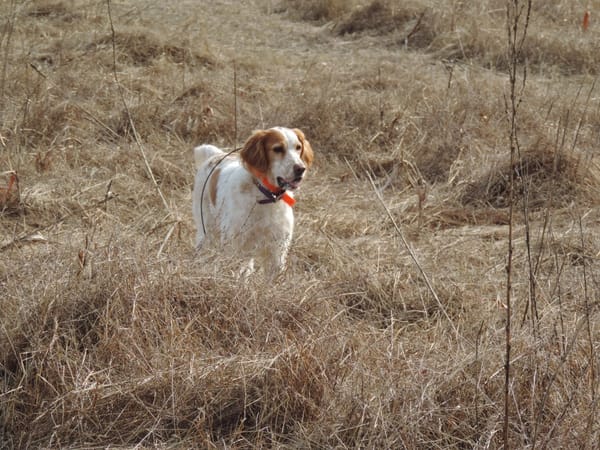
Throughout the day I had the opportunity to walk behind multiple different breeds. Everything from the usual suspects of Pointers, Setters and GSP’s to German Wirehaired Pointers, a Pudelpointer, a Gordon Setter and even one Boykin Spaniel that was able to compete under the rules of the pointing dogs. I feel that by knowing the breeds and now seeing them in action that I have gained invaluable experience in being able to understand what the standards say about performance and how it looks on the ground.
After the day of judging and the winners awarded I feel that it was a successful day. I was told by the host that he heard nothing but positive feedback and the field marshal and other organizers were happy with how it went said they have heard nothing but positive feedback as well.
Even though it was a non sanctioned I felt privileged to be asked to judge and it was an honor to be able do it